Author name: Yogendra@

✍️ Content Marketing

How to Turn One Blog Post Into Multiple Pieces of Content ?

How to Turn One Blog Post Into Multiple Pieces of Content Most content teams spend hours researching, writing, and editing a single blog post — and then the moment it’s published, they move straight on to the next topic. The post sits there quietly doing its job, while all that research and thinking behind it never gets used again. Here’s the thing: one good blog post usually has more value in it than a single publish date gives it credit for. Buried inside that one article are enough ideas for social posts, a short video or two, an email, maybe even a carousel. You don’t always need a fresh idea to fill next week’s content calendar. Sometimes you just need a better way to use what you already wrote. That’s really what content repurposing is about — not copying and pasting the same paragraph into five different apps, but pulling the useful pieces out of one article and reshaping them for the places your audience actually spends time. Click here Quick Answer: How Can One Blog Post Become Multiple Pieces of Content? A blog post can be repurposed by pulling out its key ideas, tips, examples, and questions, then reshaping each one for a different format — a social post, a short video, an email, a carousel, an infographic, or an FAQ. The core idea stays the same; only the length, tone, and presentation change to fit each platform. What Is Content Repurposing? Content repurposing means taking something you’ve already created and adapting it into a different format, instead of writing everything from scratch every single time. It’s not the same as simply reposting the same text on another platform — that usually falls flat because every platform has its own rhythm. A blog post is written to be read slowly, with headings and paragraphs. A LinkedIn post is read in seconds, often on a phone, competing with a dozen other things in someone’s feed. If you post the exact blog paragraph as a LinkedIn update, it usually looks out of place and gets scrolled past. Say you wrote a detailed post on email marketing mistakes. Repurposing it doesn’t mean pasting the whole thing into an email. It means picking one mistake, rewriting it in two or three punchy lines, and turning it into its own post — something that makes sense even if nobody has read the original article. Why Should You Repurpose Your Blog Content? 1. Save Time You’ve already done the research and worked out your main points. Reusing that thinking is a lot faster than starting from a blank page for every new piece of content. 2. Reach More People Not everyone reads blogs. Some people prefer short videos, others scroll Instagram, others only open emails. Repurposing puts the same core idea in front of people wherever they actually are. 3. Stay Consistent Publishing consistently gets a lot easier once you’re not trying to invent a brand-new topic every single time. One blog post can quietly fuel a week or two of smaller content. 4. Get More Value From Existing Work A well-researched article shouldn’t be used once and forgotten. Repurposing stretches the value of the time you already put into writing it. 5. Reach Different Platforms Blog readers, social scrollers, email subscribers, and video viewers all behave differently. Adapting the format to match each group usually works better than expecting everyone to come to your blog. 6. Reinforce Important Ideas Seeing the same useful idea in a few different places — a post, a video, an email — can help it actually stick with people, instead of being forgotten the moment they close the tab. 7. Support SEO and Distribution Repurposed content can link back to the original post and to related pages on your site, helping tie your content together and giving people more paths back to your website. How Many Pieces of Content Can You Create From One Blog Post? There’s no fixed number here — it really depends on how detailed the post is. But as a rough guide, one solid, well-structured article can often provide the raw material for: 5–10 social media posts 1–3 short-form videos 1 LinkedIn post 1 email newsletter 1 infographic 1 carousel 5–10 FAQ entries 1 checklist 1 longer video script A few quote-style or insight posts These are examples to give you a sense of scale, not a guarantee. A short, narrow post might only give you two or three good ideas, and that’s fine — better to repurpose a handful of things well than force ten weak ones out of it. How to Turn One Blog Post Into Multiple Pieces of Content Step 1: Choose a Strong Blog Post Not every article is worth repurposing. Look for posts with genuinely useful information, a few distinct subtopics, practical tips, real examples, or a step-by-step process. Evergreen posts — the kind that stay relevant for months or years — are usually the best candidates. Step 2: Identify the Main Ideas Go back through the post and pull out the core pieces: the main argument, the key lessons, any strong tips, examples you used, questions you answered, and any step-by-step process you walked through. Step 3: Group Related Ideas Some of these ideas will naturally cluster together. A section on common mistakes might become one theme; a section on tools might become another. Grouping them makes it easier to plan several pieces of content instead of one big pile of notes. Step 4: Match Ideas With Formats A quick tip works well as a short social post. A process with clear steps often works better as a carousel or short video. A tricky concept that needs explaining might be better suited to email, where you have more room to explain. Step 5: Adapt for Each Platform This is the step people skip, and it’s the one that matters most. Don’t copy blog paragraphs word-for-word. Change the length, the tone, the opening line, and the call to action

✍️ Content Marketing

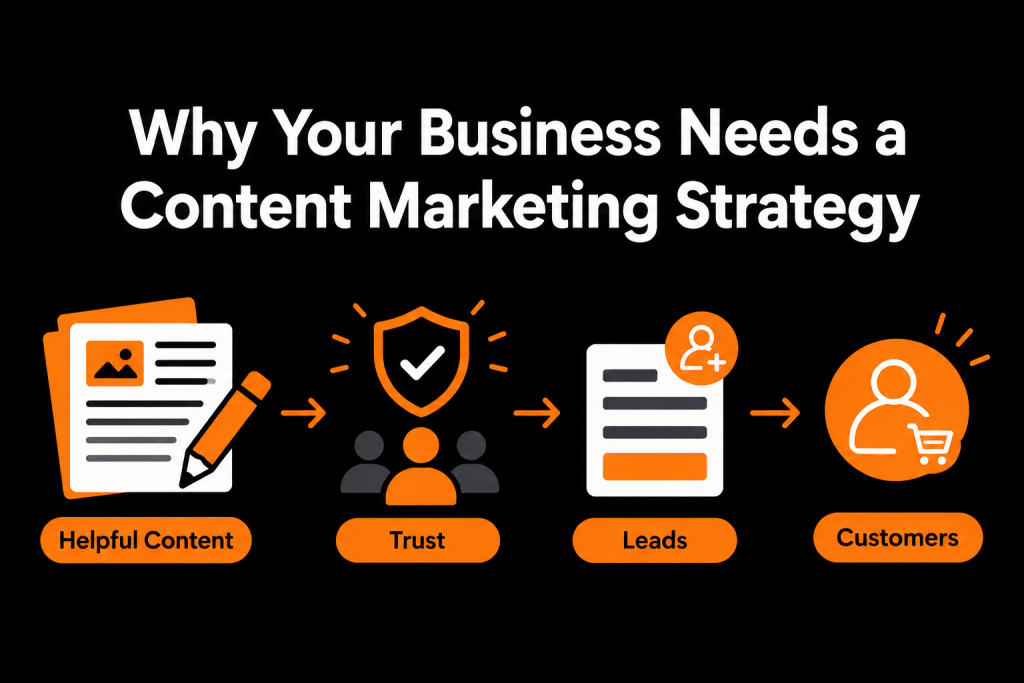
Why Your Business Needs a Content Marketing Strategy ?

Why Your Business Needs a Content Marketing Strategy Most businesses today aren’t struggling to create content. Scroll through their website and you’ll usually find blog posts, a handful of Instagram reels, maybe a newsletter that goes out most months. The content is there. What’s missing is a reason for it to exist. Click here Talk to almost any business owner honestly and you’ll hear the same story: we post because we’re supposed to, we write blogs because someone said it helps SEO, we share on social media because everyone else does too. There’s activity, but there isn’t direction. After a few months, the results usually look the same — a little traffic, a few likes, but no real connection to leads or sales. That gap between publishing content and getting business results almost always comes down to one thing: strategy. Not more content. Not fancier content. A clear plan that decides who you’re writing for, what problem you’re solving for them, and what you want them to do next. That’s what a content marketing strategy actually is, and it’s why businesses that build one tend to grow steadier than those who simply post and hope. Quick Answer: Why Does a Business Need a Content Marketing Strategy? A content marketing strategy matters because it turns random publishing into a plan with a purpose. It helps you decide who you want to reach, what that audience actually needs, which formats and channels make sense, and how each piece connects to a business goal — traffic, trust, or leads. Without it, content becomes guesswork. What Is a Content Marketing Strategy? A content marketing strategy is the plan behind your content, not the content itself. It defines who you’re trying to reach, what topics matter to them, which formats make sense, where you’ll publish, and how you’ll know if it’s working. Content creation is just the doing part — writing the blog, filming the video, designing the graphic. You can create content without a strategy; plenty of businesses do. But without a plan connecting that content to a goal, you’re mostly throwing ideas out and hoping something sticks. Here’s a simple way to picture it. A local accounting firm doing content creation might think, “let’s write a blog about tax season.” The same firm working from a strategy would say: “our ideal clients are small business owners who get anxious every March about filing late — let’s build a short series on deadlines, common mistakes, and how we help, published monthly starting in January, shared through email and LinkedIn, and each post ends with a consultation link.” Same topic. Very different outcome. Content Creation vs Content Strategy Content Creation Content Strategy Focuses on producing content Focuses on why the content is being created Individual posts or videos A connected, ongoing content plan Topic-focused Audience and business-goal focused Often a short-term activity Built for the long term May generate some traffic Designed to support real business objectives Why Creating Content Without a Strategy Can Be a Problem Publishing often feels productive — you’re putting something out, so it seems like progress. But content without direction tends to run into the same problems again and again: Topics chosen randomly, based on what feels interesting that week No clear picture of who the content is actually for Messaging that shifts from one post to the next No real link between the content and a business goal Calls to action that are vague or missing entirely No planned journey from first blog to final decision Weak or non-existent internal linking between pages Publishing in bursts, then going quiet for months No one tracking whether any of it is working Content that pulls in visitors who were never going to buy anything None of this means the content is bad. It usually means there was no plan guiding it. Publishing frequently isn’t the same as publishing effectively. Why Your Business Needs a Content Marketing Strategy 1. It Helps You Understand Your Audience Before you write a single headline, a strategy forces you to ask who you’re actually talking to. What do they struggle with? What do they search for at 11pm when they can’t sleep? That understanding shapes every topic you pick afterward, instead of you guessing at what might interest people. 2. It Gives Your Content a Clear Purpose Every piece of content should earn its place. A strategy makes you ask, before you write anything, what this post is supposed to do — build awareness, answer a question, move someone closer to booking a call. Content without a purpose tends to just sit there. 3. It Builds Brand Awareness Consistent, useful content is one of the simplest ways for people to become familiar with your business before they ever need what you sell. Over time, showing up with genuinely helpful information makes your name recognisable in your industry. 4. It Builds Trust People buy from businesses they trust, and trust is built slowly, through repeated proof that you know what you’re talking about. A strategy keeps that proof consistent instead of scattered. 5. It Supports SEO Search engines reward sites that consistently cover topics their audience is searching for, in a way that actually answers the question. A strategy keeps your content aligned with real search intent instead of random keyword guessing. 6. It Attracts the Right Audience Traffic on its own means little if the people arriving were never going to become customers. A strategy targets the specific problems your ideal audience has, which naturally filters in the right kind of visitor. 7. It Supports Lead Generation Strategic content is built with a next step in mind — a form, a call, a free guide, a consultation. That doesn’t guarantee leads, but it creates the opportunities for interested people to raise their hand. 8. It Supports the Customer Journey Not every visitor is ready to buy today. A strategy plans content for people at different stages, from someone just discovering a problem to someone comparing

✍️ Content Marketing

How to Create Content That Builds Trust and Brings Leads?

How to Create Content That Builds Trust and Brings Leads You’re publishing blog posts. Maybe you’re active on social media too. People are visiting your website. And yet the phone isn’t ringing much, and your inbox isn’t filling up with enquiries. If this sounds familiar, the problem usually isn’t a lack of content — it’s that the content isn’t doing what it needs to do. It might not be useful enough. It might not be specific enough to your actual customers. It might not feel trustworthy, or it might just be missing a clear next step for someone who’s actually interested. People become leads when content helps them understand their problem, trust that you know what you’re talking about, and see a clear path forward from there. That’s what this article is about — not just creating more content, but creating the kind that actually earns trust and turns into real enquiries. Quick Answer: Trust-building content answers real customer questions, provides genuinely useful information, demonstrates knowledge and experience, addresses concerns and objections honestly, uses real examples or evidence where appropriate, and gives the reader a clear, relevant next step — rather than jumping straight into a sales pitch. Click here What Makes Content Trustworthy? Trustworthy content is accurate first — getting the basics right matters more than sounding impressive. It explains things clearly, without unnecessary jargon getting in the way. It includes relevant examples that actually help the reader picture the situation, and it’s transparent rather than dressed up as something it isn’t. It also shows real experience and expertise — not by claiming it, but by demonstrating it through the quality of the explanation itself. Original insight matters too, as does being honest about limitations instead of pretending every solution is perfect. And underneath all of it, the writing should feel genuinely helpful rather than overly promotional. What makes content trustworthy Why Does Trust Matter in the Buying Process? Most people research a business before ever picking up the phone or filling out a form. They’re weighing risk, comparing options, and looking for reliable information that helps them feel confident in a decision that costs them time or money. For example, someone searching for a website development company might first read guides about typical website costs, realistic development timelines, different CMS options, or common mistakes businesses make when building a site — long before they ever reach out to anyone. If your content is what answers those questions honestly, you’ve already built a head start on trust before the conversation even begins. Start With Your Customer’s Real Problems The best content usually starts with a simple question: what is my customer actually struggling with right now? Not a topic that sounds good on a content calendar — a real, specific problem. Good sources for this include the questions customers actually ask, what your search queries reveal, what your sales team hears repeatedly, common support questions, objections you hear before someone buys, and the basic beginner questions people are sometimes embarrassed to ask out loud. A plumber might notice customers frequently ask “how do I know if it’s actually an emergency,” which is a genuinely useful, specific topic — far more useful than a generic “plumbing tips” post. Give People Real Answers, Not Just Sales Pitches There’s a real difference between genuinely helpful content and promotional content dressed up to look helpful. A pricing article that avoids actual numbers and just says “contact us for a quote” isn’t really answering the question someone came with. Honest content — covering pricing ranges, pros and cons, common mistakes, fair comparisons, real limitations, and things a customer should genuinely consider before buying — tends to build far more trust than content that avoids anything that isn’t flattering. Being straightforward, even about downsides, signals that you’re not just trying to close a sale. Show Your Expertise Without Saying “We’re the Best” Claiming to be an expert does very little on its own. Demonstrating it through useful explanations, practical advice, original insight, concrete examples, data from reliable sources, honest case studies, and clear step-by-step guidance does far more. A reader who finishes an article thinking “that actually made sense, and I learned something real” walks away trusting you more than one who reads a page full of “industry-leading” and “best-in-class” claims with nothing to back them up. Use Examples That Help Readers Understand Examples make abstract advice concrete. A before-and-after scenario, a simple hypothetical business situation, or a mini example tied to a real customer problem all help a reader picture exactly what you mean, rather than nodding along to something vague. It’s worth being clear about one thing: if an example is fictional, say so. Never present an invented scenario as a real customer result — that’s the kind of thing that quietly destroys trust the moment someone notices. Use Social Proof to Reduce Doubt Genuine customer reviews, testimonials, real case studies, honest client feedback, actual results, and portfolio examples all help reduce hesitation — they show a reader that other people have already trusted you and had a good outcome. This only works if it’s real. Fabricated reviews, invented statistics, or made-up results aren’t just dishonest — they undermine the whole point of building trust in the first place. Create Content for Every Stage of the Customer Journey Awareness stage: the person has a problem but may not know the solution yet. Beginner guides, educational blogs, how-to articles, videos, and basic FAQs work well here. Consideration stage: the person is researching possible solutions. Comparisons, detailed guides, case studies, checklists, and expert articles serve this stage better. Decision stage: the person is weighing a specific business or option. Service pages, product pages, clear pricing information, case studies, testimonials, FAQs, and consultation pages matter most here. One type of content can’t realistically serve every stage well — trying to make a single beginner guide also close the sale usually means it does neither job particularly well. How to Turn Trust-Building Content Into Leads Step

Scroll to Top