How Email Marketing Can Help Your Business Grow
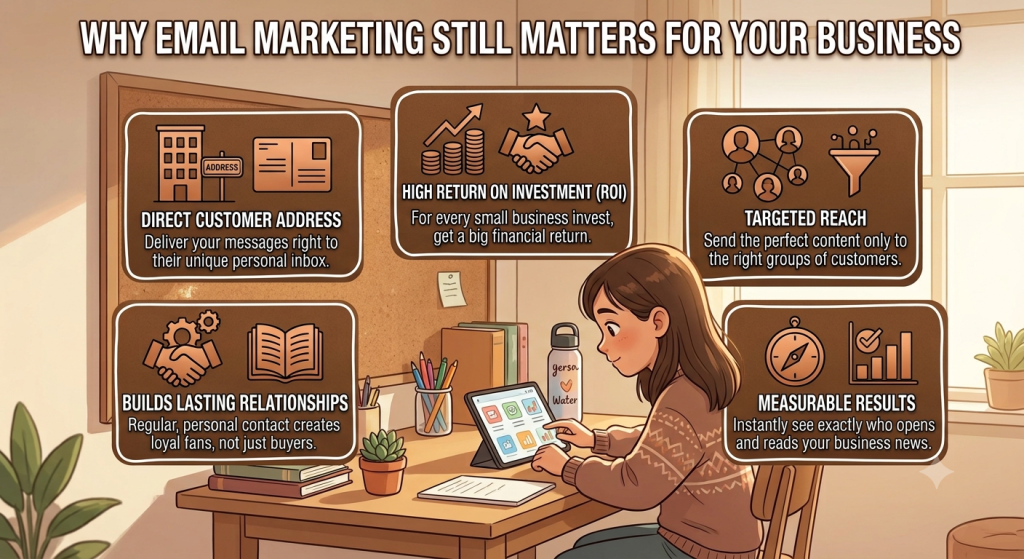
How Email Marketing Can Help Your Business Grow Every business owner is looking for practical ways to grow, without burning through the whole marketing budget on things that may or may not work. Email marketing is one of those channels that quietly keeps doing its job in the background, long after the initial excitement of a new social media platform fades. Click here It is easy to think of email as just another way to send discounts. Done well, it is much more than that. It helps you stay in touch with people who are interested in what you do, guide them toward a decision, and keep existing customers coming back. This article looks at how email marketing can help your business grow, from the first subscriber to a long-term customer relationship. EmailLeadsCustomersSalesGrowth AEO Quick Answer Quick Answer: How Can Email Marketing Help Your Business Grow? Email marketing helps a business grow by giving it a direct way to talk to people who are already interested. It can nurture leads with useful information, promote relevant products or services, build trust over time, encourage repeat purchases and keep your audience engaged between visits to your website or store. Used consistently, it supports both new sales and long-term customer relationships. What Is Email Marketing? Email marketing means sending emails to people who have agreed to hear from your business, such as newsletters, updates, tips or offers. You can send to website subscribers, existing customers, people who downloaded a resource or anyone who signed up through a form. Permission and relevance matter here. Email marketing is not about blasting a list of strangers with adverts. It works because the people on your list chose to be there, and it stays useful only if what you send actually matters to them. Example: a bakery sends a short weekly email about new items and weekend specials to customers who signed up in-store. That is email marketing, nothing more complicated than that. Why Email Marketing Can Support Business Growth Growth usually comes from a mix of these things, and email can support all of them: Attracting leads through a useful sign-up offer Nurturing prospects who are not ready to buy yet Building trust with helpful, honest communication Generating sales through relevant offers Retaining customers so they do not forget about you Encouraging repeat purchases from people who already trust you Promoting new products or services to an audience that already knows you Sharing useful information that keeps you top of mind Staying connected without relying only on social media reach Email Marketing Helps You Build Your Own Audience An email list is a group of people who chose to hear from you, usually through a website sign-up form, a lead magnet, a newsletter, a free resource, a consultation request or a product update they opted into. It is worth saying clearly: you do not fully “own” this audience in an absolute sense, since you still rely on email providers, inboxes and applicable rules to reach people. But compared with a social media following, an email list gives you a much more direct line of communication. It is better to build a smaller list of genuinely interested people than to collect thousands of addresses from people who will never open your emails. Email Marketing Can Generate Leads Website VisitorUseful OfferEmail SignupNurturingSales ConversationCustomer A simple lead-generation path looks like this: Website Visitor → Useful Offer → Email Signup → Nurturing → Sales Conversation → Customer. The offer, often called a lead magnet, is what convinces someone to hand over their email. It should solve a real, specific problem. Good examples include a checklist, a guide, a template, a free consultation, an educational resource, a webinar, or a fair discount where it genuinely makes sense. A vague “subscribe to our newsletter” rarely convinces anyone. Email Marketing Can Help Increase Sales Email supports sales without every message needing to be a hard sell. Useful content includes product announcements, service promotions, special offers, product education, case studies, customer stories, FAQs, follow-up emails and relevant recommendations. There is a real difference between helpful selling and aggressive selling. Helpful selling explains how something solves a problem the reader already has. Aggressive selling pushes urgency and pressure regardless of whether the reader is ready. Email marketing cannot promise sales. What it can do is put a clear, honest offer in front of people who are already somewhat interested, which tends to work better than cold outreach. Email Helps Build Customer Trust Most customers need some time before they buy, especially for anything beyond a small purchase. Trust builds through helpful tips, educational content, case studies, testimonials, customer stories, FAQs, useful resources and communication that is transparent and consistent. If every email from you is a sales pitch, people stop opening them. If most emails genuinely help, people keep reading, and they are far more open to your offers when you do make one. Email Marketing Can Improve Customer Retention Growth is not only about finding new customers. Keeping the ones you already have matters just as much, and email is well suited for that. Useful retention emails include: Welcome emails for new customers Thank-you emails after a purchase Onboarding emails that help people get started Product education and helpful tips Feedback requests New product or service updates Relevant repeat-purchase offers Simple, genuine loyalty communication Staying useful and relevant, rather than going quiet until you want something, is what tends to keep the relationship alive. Email Marketing Can Encourage Repeat Purchases Once someone has bought from you, email can bring them back. An e-commerce store might send a restock alert or care tips for what they bought. A restaurant might announce a new menu item. A salon might remind clients it has been a while since their last visit. A service business, agency, coach or consultant might share a relevant update or a way to extend the work already done. The key is relevance. A repeat-purchase email should connect to what the customer already