
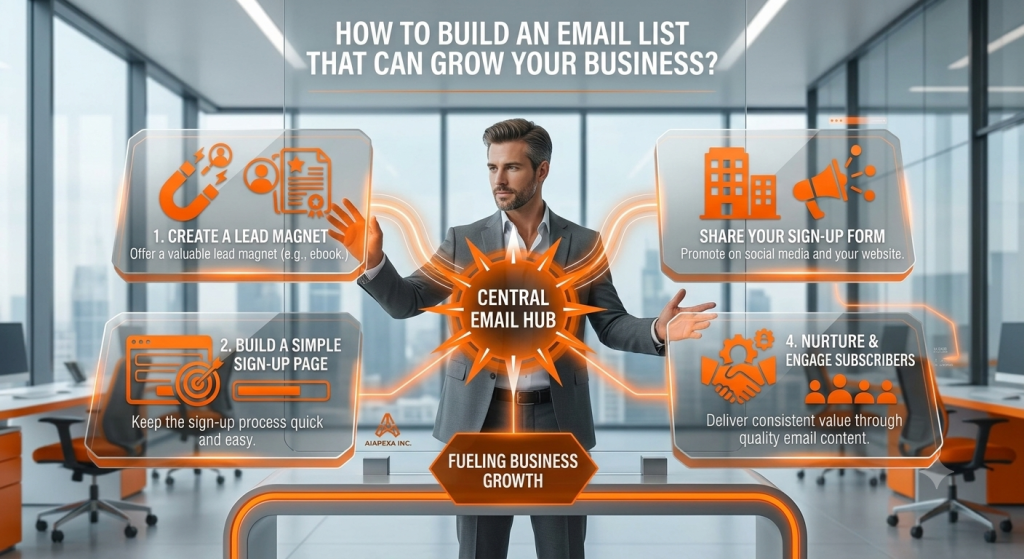
How to Build an Email List That Can Grow Your Business
Plenty of businesses have followers on social media and steady visitors on their website, and still have no direct way to reach those people again. The moment someone closes the tab or scrolls past, they’re gone. You’re relying on the algorithm, or on that person remembering you exist.
An email list changes that. It lets you talk directly to people who’ve chosen to hear from you. But the goal isn’t to collect as many addresses as possible. It’s to build an audience that has a genuine reason to stay connected.
This guide walks through how to build an email list from scratch: who to attract, what to offer, where to put your signup forms, what to send once people join, and how to keep the list healthy.
Quick Answer: You build an email list by offering something useful in exchange for permission to email people, placing clear signup forms on relevant pages, creating content that attracts the right audience, promoting your signup offer through appropriate channels, and consistently sending emails that are actually worth opening.
What Is an Email List?
An email list is a group of people who’ve given you permission to send them emails. They usually join by filling out a signup form on your website, landing page, or social profile, often in exchange for something useful like a checklist or a newsletter.
Permission matters. Someone who chose to join is far more likely to read what you send than someone who was added without asking. There’s also a difference between email contacts, which is just a list of addresses, and an engaged email audience, which is people who actually open, read, and respond.
Why Is Building an Email List Important for Your Business?
Direct communication. Email lands in someone’s inbox without depending on a platform’s feed to decide whether they see it.
Long-term relationships. Useful, consistent emails build familiarity and trust over time.
Lead generation. Subscribers are people who’ve already shown interest, which makes them future prospects.
Support for sales. Relevant product or service information can help people decide when they’re ready.
Promoting content. Email brings your existing blog posts and guides back in front of interested people.
Repeat engagement. You can stay in touch after the first interaction instead of hoping they return on their own.
Less dependence on one platform. A list you built yourself gives you another way to reach people beyond social feeds and search traffic. No channel is guaranteed, though, so it works best alongside your other marketing.
A Smaller Engaged List Can Be More Valuable Than a Huge List
A large list full of people who never open your emails isn’t worth much. What matters is relevance, engagement, permission, genuine interest, recent activity, and how well subscribers fit your business.
This is also why buying email lists is generally a poor idea. People who never asked to hear from you are unlikely to engage, it can hurt trust and deliverability, and it can create privacy and compliance problems. Rules differ by country and region, so check what applies where you operate.
What You Need Before You Start Building an Email List
It helps to settle a few things first: who your target audience is, the main problem you solve, your business goal for email, what your main offer is, which content topics you’ll cover, what you’ll give people for signing up, which email platform you’ll use, and a basic welcome sequence.
You don’t need all of it perfect. But knowing why you’re building the list makes every later decision easier.
Step 1: Know Who You Want on Your Email List
Think about who you serve, what problems they have, what questions they keep asking, what information they need, what they might eventually buy, and where they are in the buying journey.
For example, a local fitness coach might want beginners who feel intimidated by gyms, not experienced athletes. That one decision shapes the signup offer, the tone of the emails, and the topics covered.
Step 2: Give People a Reason to Subscribe
A lead magnet is something useful you offer in exchange for someone’s email address. It might be a checklist, a free guide, an ebook, a template, a discount or coupon, a webinar, a mini-course, an audit, a calculator, or a worksheet.
The best ones solve one specific problem. A generic “free ebook” created just to collect emails rarely attracts the right people, or the right number of them.
What Makes a Good Lead Magnet?
A useful lead magnet is relevant, specific, easy to understand, quick to use, genuinely valuable, and closely tied to what you actually sell.
Some examples (illustrative, not guarantees): a digital marketing agency might offer an SEO checklist. A fitness coach could offer a beginner workout planner. A travel agency might share a trip planning checklist. A website developer could offer a website launch checklist. A local service business could offer a home maintenance checklist.
Step 3: Make It Easy for People to Subscribe
Useful signup spots include your homepage, blog pages, service pages, resource pages, landing pages, the footer, and content upgrades inside articles. An exit-intent or popup form can work in the right situation, as long as it isn’t aggressive or deceptive.
Whatever the location, a good signup form makes three things clear: what the person gets, why it’s useful, and what happens next.
Step 4: Use Clear Email Signup CTAs
Specific beats generic. Try “Get the free guide,” “Download the checklist,” “Get weekly tips,” “Receive the template,” “Join our newsletter,” or “Send me the guide.”
A button that just says “Submit” tells the reader nothing about what they’re about to receive.
Step 5: Use Helpful Content to Attract Subscribers
Content and list building work well together. Blog posts, SEO content, social media, videos, guides, tutorials, webinars, case studies, and free resources can all lead someone toward a signup.
The journey looks like this: Helpful Content → Interest → Lead Magnet → Signup → Email Relationship. Content earns the attention, the lead magnet gives a reason to stay, and email keeps the relationship going.
How to Turn Blog Visitors Into Email Subscribers
Practical methods include content upgrades relevant to the post, in-content signup forms, end-of-article CTAs, related resource offers, a general newsletter signup, and topic-specific lead magnets.
For example, a post on “how to prepare for a website redesign” could offer a downloadable redesign checklist. The reader who wants that checklist is exactly the person likely to care about the emails that follow.
How Social Media Can Help Grow Your Email List
Social media can send interested followers to landing pages, free resources, guides, newsletters, webinars, and special offers.
Just saying “join my email list” rarely works. Give people a clear reason: “Grab the checklist I mentioned in the video” is far more compelling.
Where Should You Place Email Signup Forms?
Good places include the homepage, blog, service pages, landing pages, resource pages, the footer, and relevant sections within content. Match the placement to the user’s intent and the page context.
Putting a form everywhere without thinking about user experience tends to annoy people. A form that fits the page feels helpful. One that interrupts feels pushy.
Step 6: Send a Welcome Email
The first email matters because people are paying the most attention right after they sign up. Thank them, deliver the resource you promised, set expectations for what they’ll receive and how often, briefly introduce your business, and offer one useful next step.
Keep it simple. A warm, clear welcome email beats a long one trying to do everything.
A Simple Welcome Email Sequence for Beginners
Email 1: Welcome. Deliver the promised resource.
Email 2: Helpful tip. Solve a small problem related to their interest.
Email 3: Build trust. Share useful information, an example, or an insight.
Email 4: Introduce your offer. Connect your product or service to the subscriber’s problem.
Email 5: Next step. Use a relevant CTA.
Adapt this to your audience and offer. It’s a starting shape, not a rigid formula.
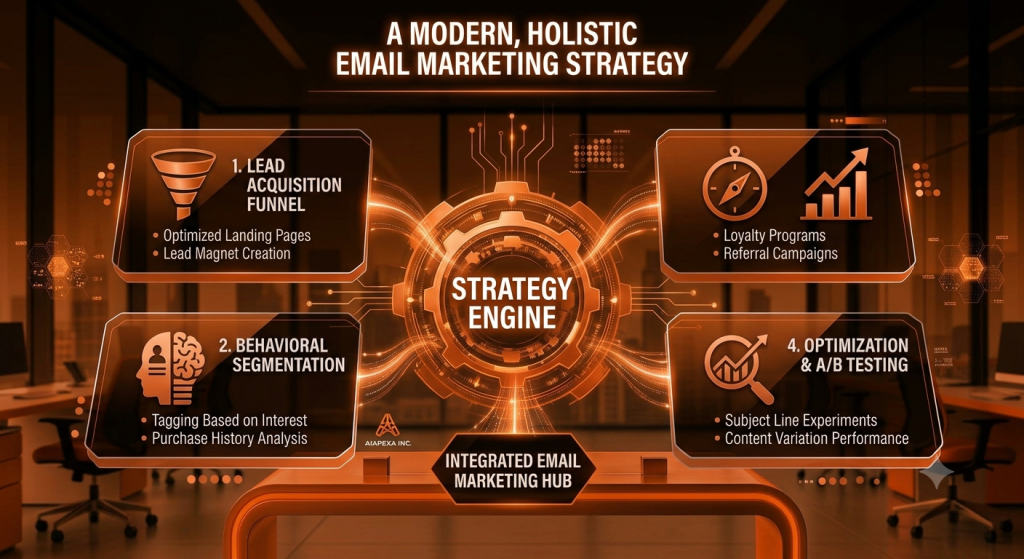
What Should You Send to Your Email Subscribers?
Mix helpful and promotional content: educational content, tips, new blog posts, industry insights, product or service information, case studies, offers, newsletters, resources, announcements, and event invitations.
There’s no proven universal ratio between useful and promotional emails. A good check is whether each email gives the reader something worth their time.
How Often Should a Business Send Marketing Emails?
There’s no single schedule that works for every business. It depends on audience expectations, business type, how much useful content you have, the purpose of the emails, subscriber preferences, engagement, and your resources.
Consistency and relevance matter more than frequency. Choose a rhythm you can maintain, and tell subscribers what to expect.
Step 7: Segment Your Subscribers
Segmentation means grouping subscribers so you can send more relevant messages. You might segment by new subscribers, existing customers, prospects, location, interests, products or services, purchase history where appropriate, engagement level, or content interests.
The aim is a better experience for the reader. It doesn’t guarantee higher open rates or conversions, but relevant emails are generally easier to read and act on.
Personalize Your Emails Without Making Them Complicated
Simple personalization can include the subscriber’s name where appropriate, their stated interests, content preferences, previous actions, and customer status.
Keep it useful, not creepy. Don’t collect more personal information than you actually need.
Keep Your Email List Clean
List growth isn’t only about adding subscribers. It’s also about keeping the list healthy. Remove or suppress invalid addresses, manage inactive subscribers thoughtfully, monitor bounces, respect unsubscribe requests promptly, avoid purchased lists, keep records of permission where appropriate, and watch engagement and deliverability.
What Do You Need to Build an Email List?
- An email marketing platform
- A signup form
- A landing page where needed
- A lead magnet
- A welcome email
- Automation where appropriate
- Analytics
- Consent and unsubscribe functionality
Features and pricing vary by platform and change over time, so check a tool’s current details before committing.
A Simple Email List Strategy for Small Businesses
Step 1: Create one useful free resource.
Step 2: Add signup forms to important pages.
Step 3: Promote the resource through content and social media.
Step 4: Send a helpful welcome sequence.
Step 5: Publish useful emails consistently.
Step 6: Review engagement and improve.
How to Turn Email Subscribers Into Customers
The journey looks like: Visitor → Subscriber → Engaged Subscriber → Prospect → Customer → Repeat Customer. Not every subscriber will buy, and that’s normal. The purpose is to build a relevant relationship and create appropriate opportunities to buy.
That means education, trust, awareness of the problem, relevant offers, genuine testimonials and case studies, and clear CTAs, without aggressive sales language.
Common Email List Building Mistakes to Avoid
- Buying email lists. Build permission-based lists instead.
- Asking for too much information. Name and email is often enough.
- Offering a weak lead magnet. Solve one specific problem.
- Using unclear signup forms. Say what they get and what happens next.
- Sending too many promotional emails. Balance offers with value.
- Sending emails without a purpose. Know what each one is for.
- Ignoring mobile readability. Check emails on a phone.
- Not sending a welcome email. Set expectations right away.
- Not segmenting when useful. Group by interest or stage.
- Ignoring inactive subscribers. Re-engage or remove them thoughtfully.
- Making unsubscribing difficult. Keep it easy and honor requests.
- Not monitoring deliverability. Watch bounces and engagement.
- Collecting emails without clear permission. Be transparent.
- Sending irrelevant content. Stay tied to why they signed up.
- Focusing only on subscriber quantity. Quality matters more.
How SEO and Email Marketing Can Work Together
The flow: Search Traffic → Helpful Content → Lead Magnet → Email Signup → Email Relationship. SEO brings people to your blog content, content upgrades and relevant CTAs turn some readers into subscribers, and email keeps them engaged.
Email doesn’t directly improve Google rankings. What it does is help you build relationships with the visitors SEO brings in.
How Content Marketing Can Help Build Your Email List
Useful content creates natural opportunities for signups: blog post → checklist, guide → newsletter, video → free resource, tutorial → template, case study → consultation CTA.
Content earns attention and trust. Email helps you keep that relationship going after the visit ends.
A Realistic Fictional Example
Consider a fictional small digital marketing agency. Its goal is more qualified leads. Its audience is local business owners who know they need SEO but don’t know where to start.
It creates a simple “Local SEO Checklist” as a lead magnet, adds a signup form to its blog posts and SEO service page, and sends a welcome email delivering the checklist. Over the next few emails, it shares a helpful tip, a short insight, and eventually introduces its SEO service, inviting interested readers to book a consultation.
Some subscribers become leads, and a few become clients. Others simply stay informed. This is a fictional example. It doesn’t represent real results, and outcomes vary by business.
A Simple Email List Building Framework
Attract → Offer Value → Capture → Welcome → Nurture → Segment → Convert → Retain.
Attract the right people with useful content. Offer value through a lead magnet. Capture their email with a clear form. Welcome them warmly. Nurture with helpful emails. Segment as you learn more. Convert with relevant offers. Retain through consistent, useful communication.
How to Measure the Success of Your Email List
Look at subscriber growth, signup conversion rate, email delivery, bounce rate, opens (where reliably measured), click-through rate, unsubscribe rate, engagement, leads, sales, revenue, and conversion rate.
Subscriber count alone isn’t enough. A smaller, relevant, engaged list can be more useful than a large inactive one.
Frequently Asked Questions
How do I build an email list from scratch?
Start with a clear audience and a useful lead magnet, add signup forms to relevant pages, promote the offer through content and social media, and send helpful emails consistently.
What is the fastest way to grow an email list?
There’s no guaranteed shortcut. Offering a genuinely useful, specific lead magnet and placing it where interested people already are usually works better than any quick trick.
What should I offer to get email subscribers?
Offer something that solves a specific problem for your audience, like a checklist, template, guide, discount, or mini-course closely related to what you sell.
What is a lead magnet?
A lead magnet is a free, useful resource you give people in exchange for their email address, such as a checklist, guide, template, or webinar.
How often should I email my subscribers?
It depends on your audience, business, and content. Consistency and relevance matter more than a fixed number, so choose a schedule you can maintain and tell subscribers what to expect.
Is buying an email list a good idea?
Generally no. People on purchased lists haven’t chosen to hear from you, which hurts engagement and trust and can create privacy and compliance issues that vary by region.
How many subscribers do I need before email marketing becomes useful?
There’s no minimum. Even a small, engaged list can be valuable, because relevance and engagement matter more than raw numbers.
How can a small business build an email list?
Create one useful free resource, add signup forms to key pages, promote it through your content and social channels, and follow up with a helpful welcome sequence.
What should I send to new subscribers?
Start with a welcome email delivering what you promised, then follow with a helpful tip, some trust-building content, and eventually a relevant offer or next step.
Can email marketing help generate leads?
Yes. Email lets you nurture interested people over time with useful information and relevant offers, which can turn some subscribers into leads and customers.
Conclusion
Building an email list isn’t about collecting as many addresses as possible. It’s about attracting the right people, giving them a genuine reason to subscribe, sending useful information, and building a relationship over time.
Start small. Pick one audience, one useful lead magnet, and one signup form on a page where interested people already land. Then send a welcome email worth reading. If you already have website visitors but no way to stay in touch, that’s the gap worth closing first.